

- Eye anatomy
Eye anatomy and vision care
Learn how the eye works, which conditions can affect vision and why regular eye examinations are important for eye health.
- Eye anatomy
Eye anatomy and vision care
Learn how the eye works, which conditions can affect vision and why regular eye examinations are important for eye health.
- Refractive errors
Errors in the refraction of light in the eye
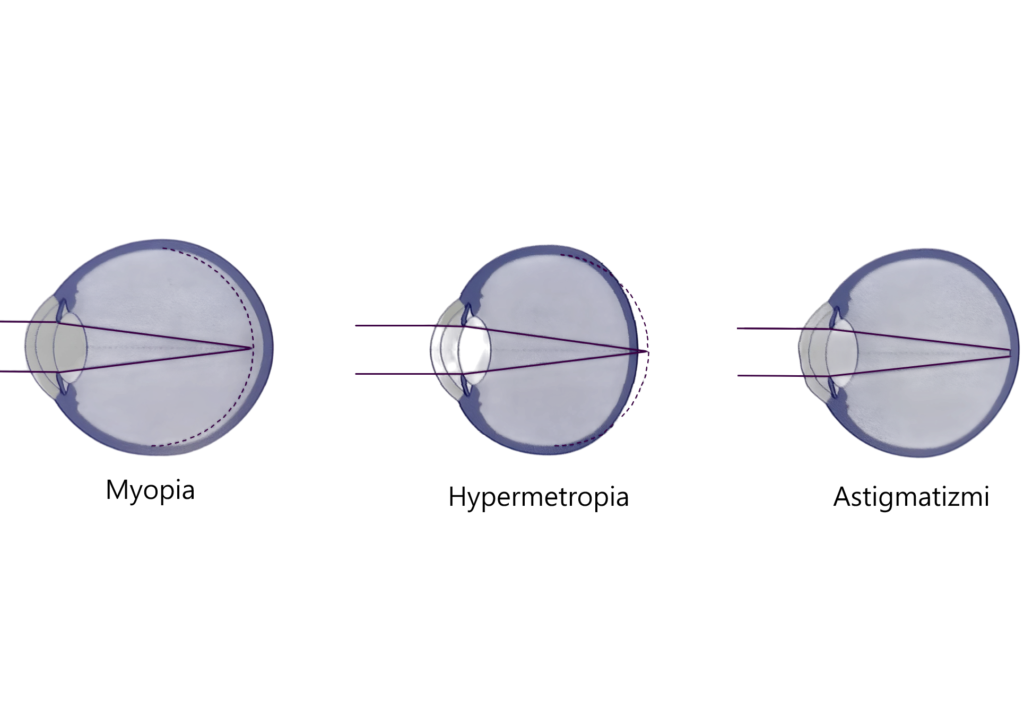
Refraction helps focus images on the retina. When this process does not work properly, vision may become blurred. Myopia, hyperopia and astigmatism are among the most common refractive errors.
- Myopia – Nearby objects appear clear, while distant objects look blurry.
- Presbyopia– Nearby objects look blurry, while distant objects remain clear.
- Hyperopia – Objects may appear blurry both near and far.
- Astigmatism – Vision may be blurred or distorted at both near and far distances.
- Eye anatomy
Understand how the eye Is structured
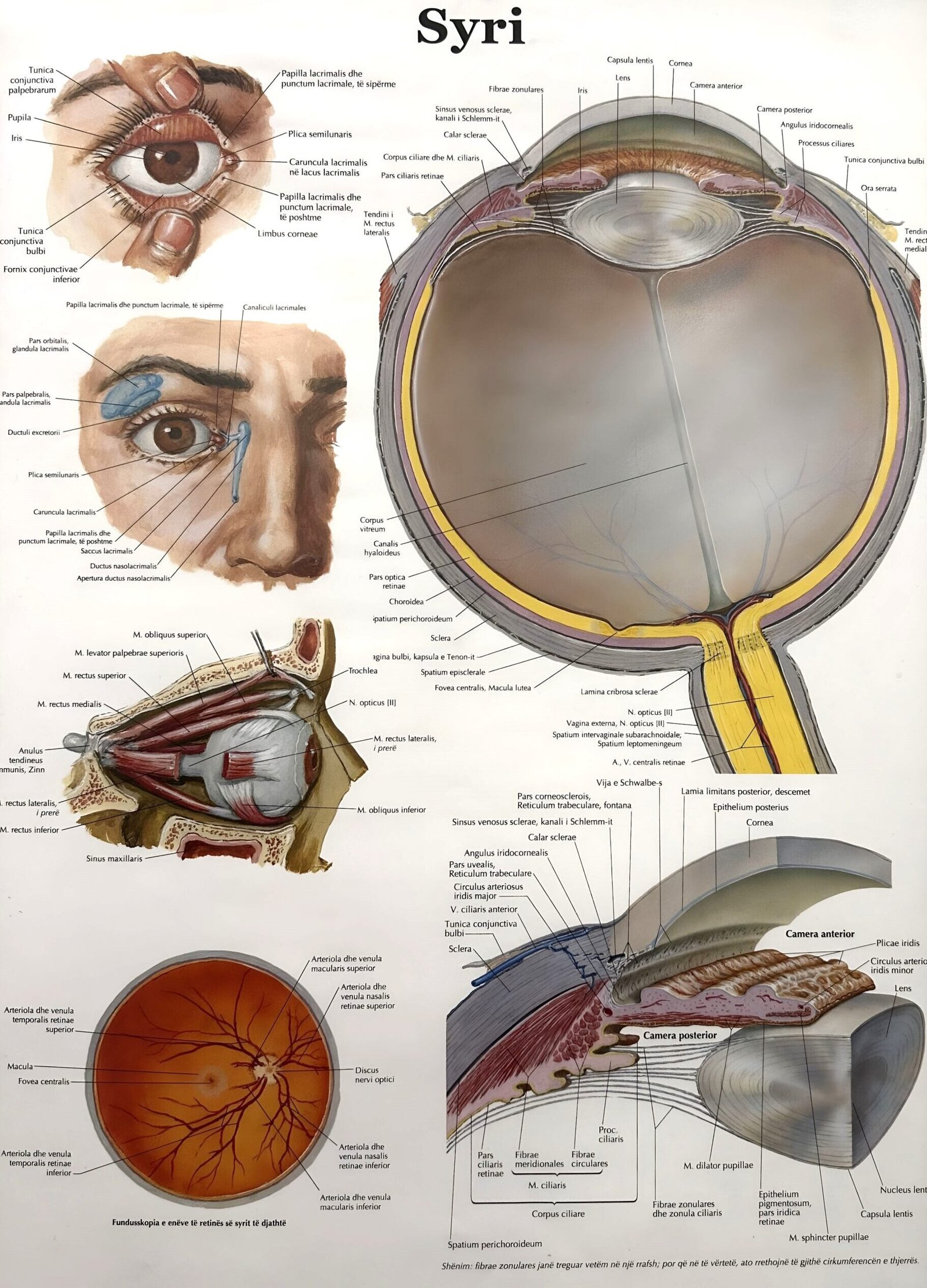
The eye is a complex organ in which every part plays an important role in vision. From the entry of light to the transmission of information to the brain, all structures work together to help us see the world around us.
- Cornea The transparent layer covering the front of the eye that helps focus light.
- Conjunctiva – A thin membrane covering the front of the sclera and the inside of the eyelids.
- Iris – The coloured part of the eye that controls pupil size.
- Pupil– The opening in the centre of the iris through which light enters.
- Lens – Focuses light onto the retina to create a clear image.
- Ciliary body – Helps change the shape of the lens for focusing and produces fluid inside the eye.
- Sclera – The protective white layer that gives the eye its shape and strength.
- Choroid – The blood-vessel layer that supplies the retina with oxygen and nutrients.
- Retina – The light-sensitive layer that converts light into nerve signals.
- Vitreous body – A transparent substance inside the eye that helps maintain its shape.
- Optic nerve – Carries visual signals from the retina to the brain.
- Tear ducts – The system that helps drain tears from the surface of the eye.
Interested in our services? Contact us today!
Contact us for more information about our services or to book an appointment at Ordinanca Vizioni.
Pediatric Ophthalmology
- © 2026 Ordinanca Vizioni
- Web design Primeframe